


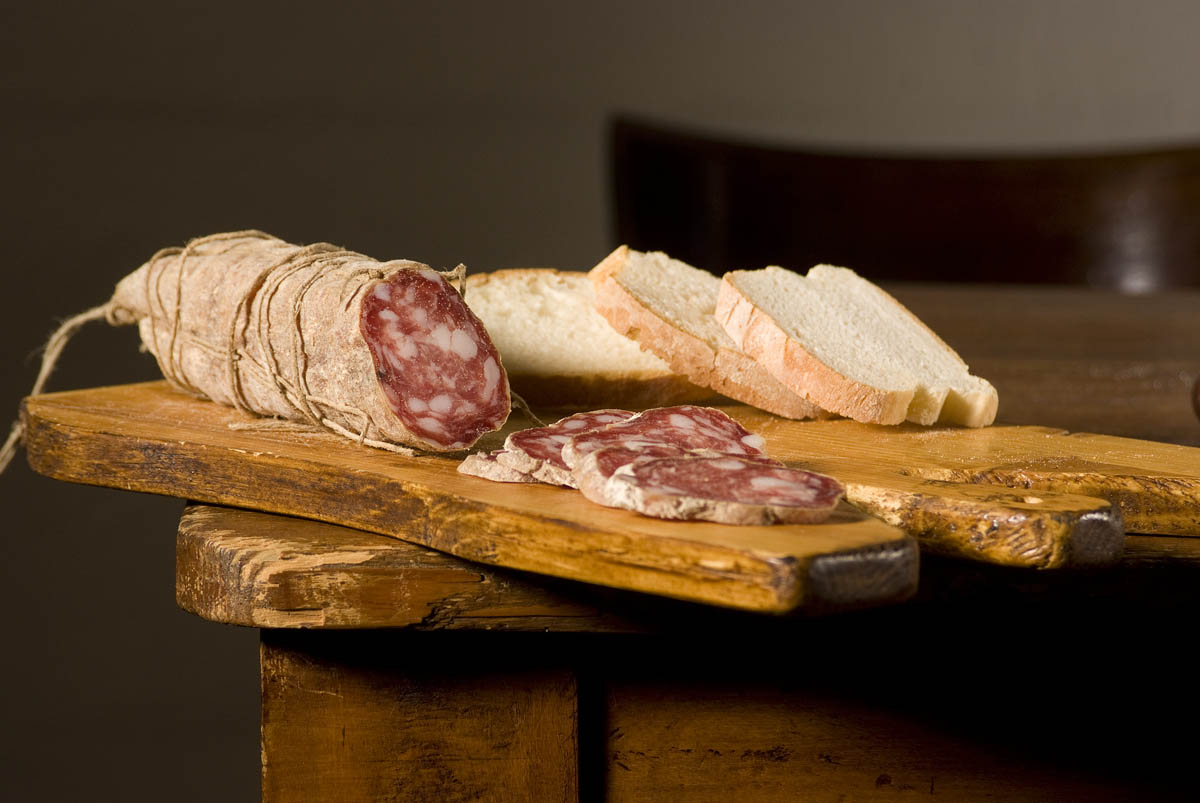
Salame: a Product that Reflects its Territory
Salame is a cured meat with countless regional and local varieties,ranging from delicate to intense and spicy. The grind – fine, medium, or coarse – reflects not only the processing style but also the cultural identity of the origin area. Salame is known for its compact texture and unmistakably aromatic scent.
Its origins date back centuries. Over time, salame has evolved into a true family of specialties, each with unique traits.
Whatever the variety, salame remains the undisputed star of the Italian aperitivo. Thanks to its balanced saltiness and intense aromas, every bite becomes a moment of authentic convivial pleasure.
Paired with a glass of wine, salame creates harmonious combinations where its aromatic complexity is complemented by the wine’s structure.
How salame is made
Salame types vary in size, grind, added spices and aging time, each reflecting the local traditions and recipes of the production area.
Despite this variety, the production process shares key steps: the meat, fat and spice mixture is carefully prepared, stuffed into casings and left to age.
Aging occurs in controlled environments, with duration depending on the product’s size and nature. This is when salame develops its distinctive taste and aroma.
The meat’s grind and use of ingredients like garlic, fennel, chili pepper or other local spices give each salame a unique, recognizable personality.